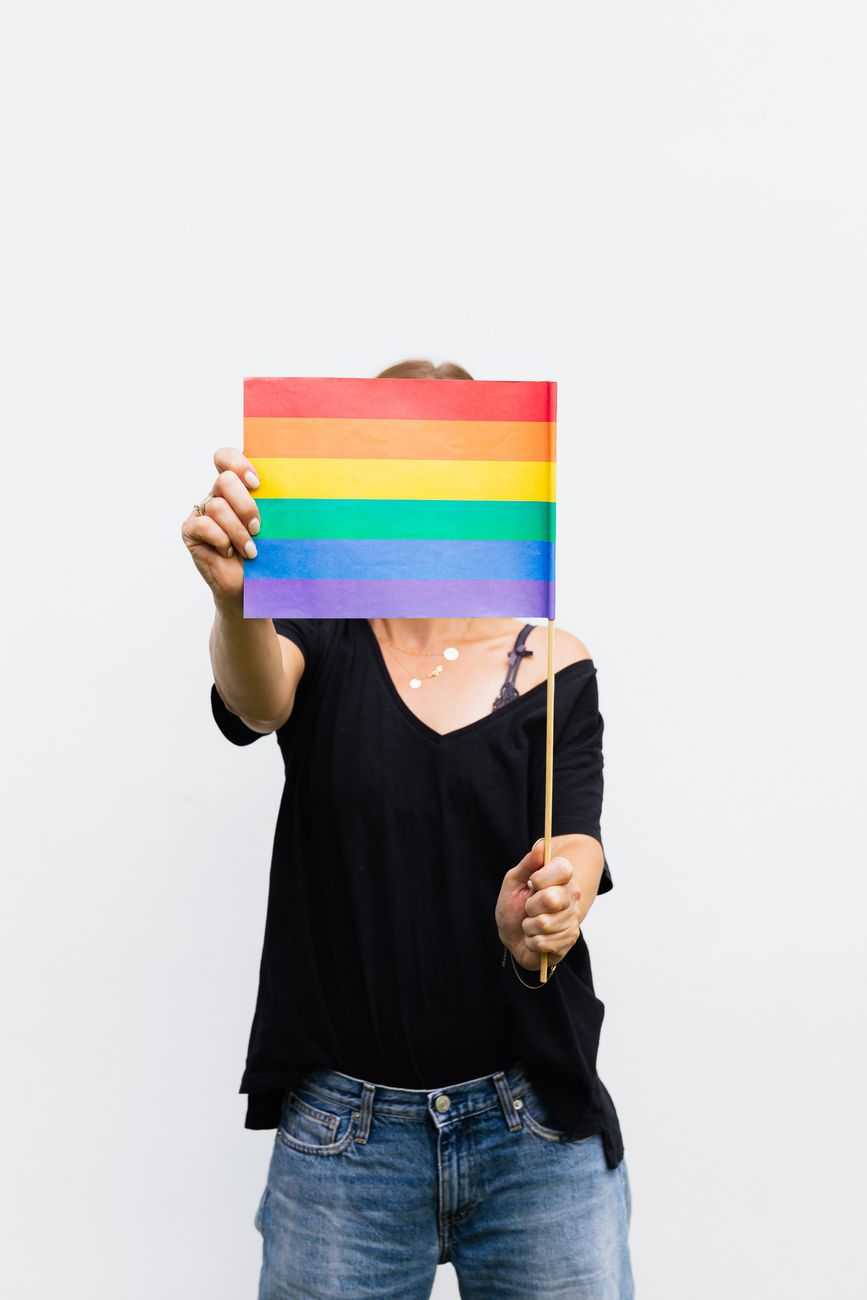
By, Elle, Seattle, Washington–September 2026
Most people deal with mental-health issues at some point in their lives. If you are lucky enough not to have your own, chances are you love, work with, or know someone who does. “Issues” is a broad word, and I use it on purpose. Words like crisis can make everything sound like a five-alarm fire when sometimes the problem is more like a smoke detector chirping at 2:00 a.m.—still upsetting, but not necessarily proof that the house is burning down.
I have spent more than 50 years dealing with my own issues. At 58, I do not claim to be an expert, although I have logged enough personal field research to earn an honorary doctorate from the University of “Well, That Did Not Work.” I have barked at the moon, mourned the loss of “normal,” and wondered what normal even meant. Frankly, normal is a suspicious word. It often means, “Please act in a way that makes everyone else comfortable.”
For much of my life, peace seemed like something other people received in a welcome basket at birth. I thought I had somehow missed the pickup window. But I have learned that peace can be built. It is not always easy, and it rarely arrives with a marching band. Still, it is obtainable.
Different Kinds of Work
Wellness takes work—but not necessarily the kind of work that leaves you emotionally face-down in a ditch.
There are many levels of effort. Digging a ditch with a shovel and pickaxe is work. Smiling and saying “Welcome to the store” for eight hours is also work, though sometimes that may require the emotional stamina of a Navy SEAL. Mental-health work has the same range.
A person can throw themselves into wellness like it is an Olympic event: therapy twice a week, support groups, journaling, healing workshops, meditation apps, mood trackers, check-ins, affirmations taped to every household appliance, and perhaps a crystal balanced on the forehead for good measure. Those things can be helpful. But doing all of them at once can become exhausting.
I have tried the ditch-digging version of wellness. I worked so hard at getting better that I wore myself out. Then I cried because I thought I had failed at healing, which is an especially rude thing for the brain to do. Eventually, I realized I had not failed. I had simply chosen a method I could not sustain.
Finding My Path
Years ago, a counselor told me, “Find your path.” At the time, I heard the words but did not fully understand them. For decades, I believed I was following my own path. In reality, I was often trying to please people who had hurt me, earn approval from people who did not have my best interests at heart, or squeeze myself into society’s idea of who I should be.
That is a lot of traffic for one little path.
As a transgender person, I spent years trying to exist in a gender that was not mine. I thought survival meant adapting, blending in, and keeping other people comfortable. Eventually, I learned that constantly performing a version of myself for others was not peace. It was exhaustion with better lighting.
My path became clearer when I stopped treating other people’s expectations as a GPS system. I began asking a more important question: What do I need to live honestly and well?
Opposite Action
One of the most useful tools I found was “opposite action,” a skill often taught in dialectical behavior therapy, or DBT. For me, it meant doing the opposite of my old habits when those habits were rooted in fear, guilt, people-pleasing, or avoidance.
When someone asked me to overcommit, I said no. Life went on.
When I was being pulled toward an unhealthy relationship, I walked away. Life went on.
When I stopped hiding my gender identity and began living as myself, life did more than go on. Life became better.
When I stopped trying to earn my mother’s approval, I learned that she could meet me where I was—or not. Either way, I did not have to abandon myself to keep someone else comfortable.
This was not about becoming selfish or careless. I do not set out to hurt people. I simply decided that being a good person did not require me to erase myself, apologize for existing, or accept treatment that harmed me. I began focusing less on imaginary guilt and more on reality.
It turns out that “no” is a complete sentence. It can also be followed by a snack, a nap, or a peaceful evening at home.
Choosing Sustainable Tools
Once I had more room to be myself, I could choose wellness tools that actually helped. I participated in DBT, attended group sessions, did the homework, practiced the skills, and kept showing up. I also paid attention to my body and my limits.
I chose groups because I wanted to be there—not because guilt told me I owed everyone my time. I learned to release guilt, including the strange guilt that comes from not feeling guilty. That was a surprisingly large weight to put down.
I practiced expressing myself honestly. I used a half-smile, even when I did not feel like smiling. I spoke with intention. I set boundaries. I gave myself permission to be a transgender woman living her actual life, rather than a character written by everyone else.
Over time, those opposite actions became habits. The thoughts of despair became less powerful. Peace did not arrive all at once, but it began to show up more often—quietly, like a cat that has finally decided you are acceptable.
A Practical Message
Wellness is not a contest, and it is not punishment for having a difficult life. It is ongoing work, but the work should fit the person doing it.
Follow your own path, even if other people do not understand the directions.
Choose tools that help you rather than tools that merely make you look “productive” at healing.
If a wellness routine is too hard to sustain, make it smaller and gentler.
Practice opposite action when fear, guilt, or old habits are driving the bus.
Set boundaries without writing a 12-page apology letter.
Breathe. Then breathe again, because apparently that is important.
Keep going.
It took me almost five decades to arrive at a more peaceful relationship with myself. At 58, I am still learning, still practicing, and still occasionally barking at the moon. But now I know I am not broken. I am a person who has done the work of becoming more fully herself.
And that is wellness.